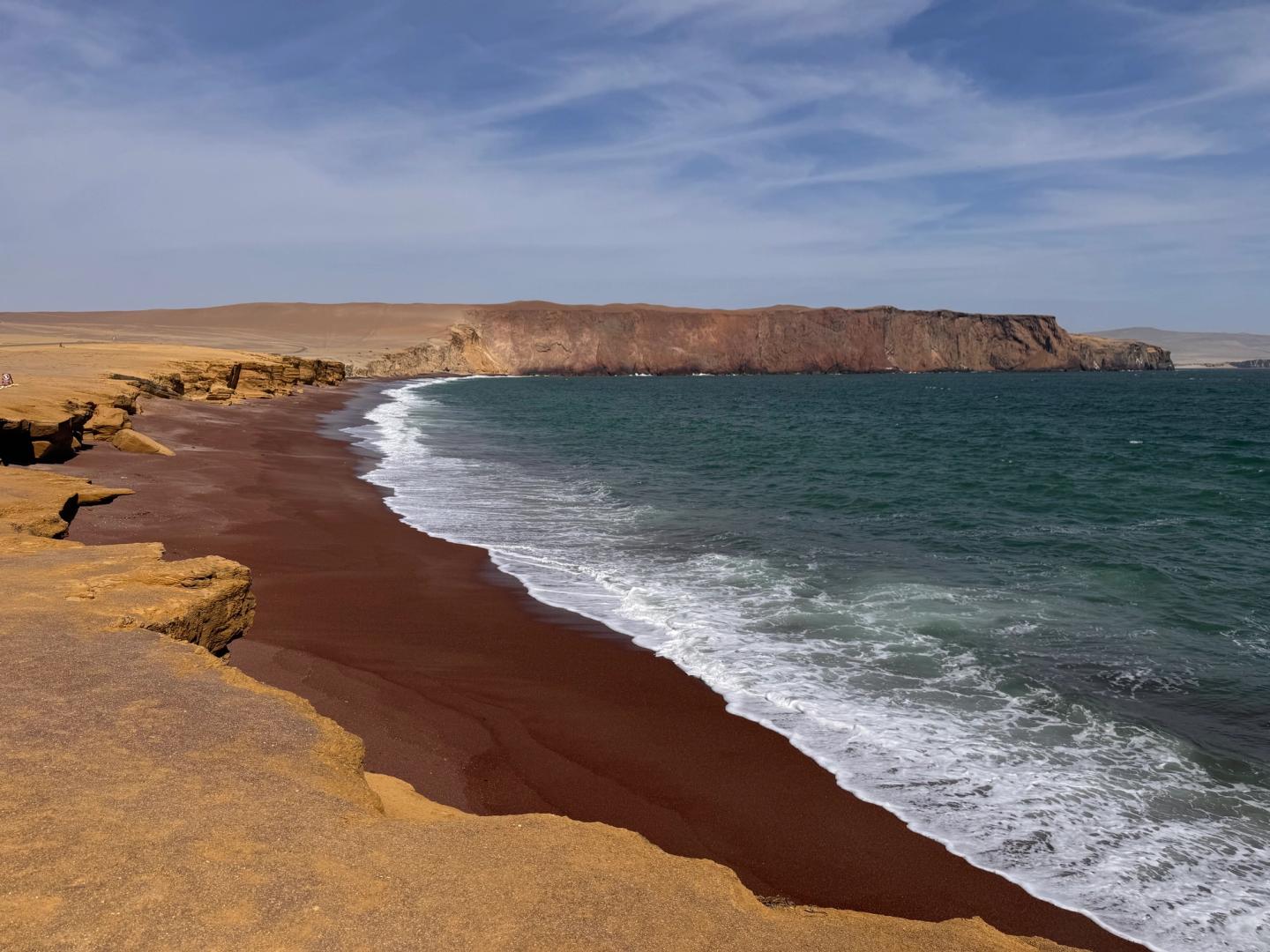

Between Paracas and Nazca, the Panamericana can appear to cross empty land, yet four distinct landscapes sit behind that first impression. Paracas faces the ocean and peninsula; Ica lives from an irrigated farming valley; Huacachina forms a small oasis of hotels and restaurants against high dunes; Nazca opens into an extensive archaeological landscape.
This area fits well into a route from Lima to Arequipa without the altitude of the Andes. Split your overnight stays between the places you want to visit: boat departures, separate bus terminals, dune activities and dispersed archaeological sites each require travel time.
Four stops, three possible bases
Paracas is the base for Ballestas and the national reserve. Ica and Huacachina are close together but emphasise different things: city, museum and pisco versus lagoon and dunes. A night in Nazca creates room for more than a brief roadside-tower stop. Paracas, either Ica or Huacachina, and Nazca are consequently the three natural places to sleep.
Paracas: keep sea and land distinct
The Ballestas Islands are observed by boat; Reserva Nacional de Paracas is a landscape circuit across the peninsula. They share a coastline, not an experience. Plan them as separate parts so that a shifted boat departure does not automatically squeeze out the reserve. The small centre around El Chaco is convenient for departures, meals and an overnight stay.
Ica or Huacachina as your base
Choose Ica for Museo Regional, local food, bus links and a deliberate bodega route. Choose Huacachina when you want to walk straight from your accommodation to the lagoon and dunes and enjoy a lively traveller atmosphere. Each allows visits to the other; the real difference is what you want around you on waking and at the end of the evening.
The valley behind the glass
Grapes make the green fringe around Ica economically and culturally visible. A bodega visit is most useful when it explains production: permitted pisco grapes, fermentation, distillation and style differences. Keep this separate from a dune ride; a full tasting and a motorised activity do not fit naturally into the same short part of a day.
Nazca: lines, water and settlement
The geoglyphs become a regional story when set beside Cantalloc’s water engineering and Cahuachi’s ceremonial world. Museo Antonini gathers finds from the excavations. A flight conveys scale; a roadside tower reveals material and proximity; neither offers the whole landscape without context.
How many nights fit the substance
- Two nights: choose Paracas plus Ica/Huacachina, or Ica/Huacachina plus Nazca; all four places become too tight.
- Three nights: one in Paracas, one in Ica or Huacachina and one in Nazca gives each zone its own part of a day.
- Four or five nights: add the extra night where your priority lies — coast and reserve, museum and pisco, or archaeology around Nazca.
Buses and the last kilometres
The main line follows the Panamericana, but accommodation and attractions do not all sit at one stop. In Ica, bus companies use several terminals or private offices; Huacachina has no general intercity station. Around Nazca, many sites lie beyond town. Check the exact departure address for every ride and arrange the final kilometres separately.
Northbound or southbound
Southbound, the sequence develops naturally from ocean to valley and archaeology, with Arequipa as the next major stop. Northbound, the reverse order provides a lighter finish by the sea. Avoid combining an early activity, a long bus and a flight from Lima on the final day; delays on the road can put that connection at risk.
Food changes with the landscape
Paracas centres on coastal dishes; the Ica valley on pallares, pisco, grape products and sweets such as tejas. Carapulcra and sopa seca point towards the wider region’s Afro-Peruvian history, particularly Chincha. Nazca shares much of this cooking, while its aqueducts make visible how much organisation farming requires in such dryness.