A jumper for Cusco, a light shirt for Puerto Maldonado and something against the coastal wind: layers work well together on a trip through Peru. Start with clothing you will wear in several places. Then add what your particular outings require. A train journey with a small bag and a multi-day trek each deserve their own preparation.
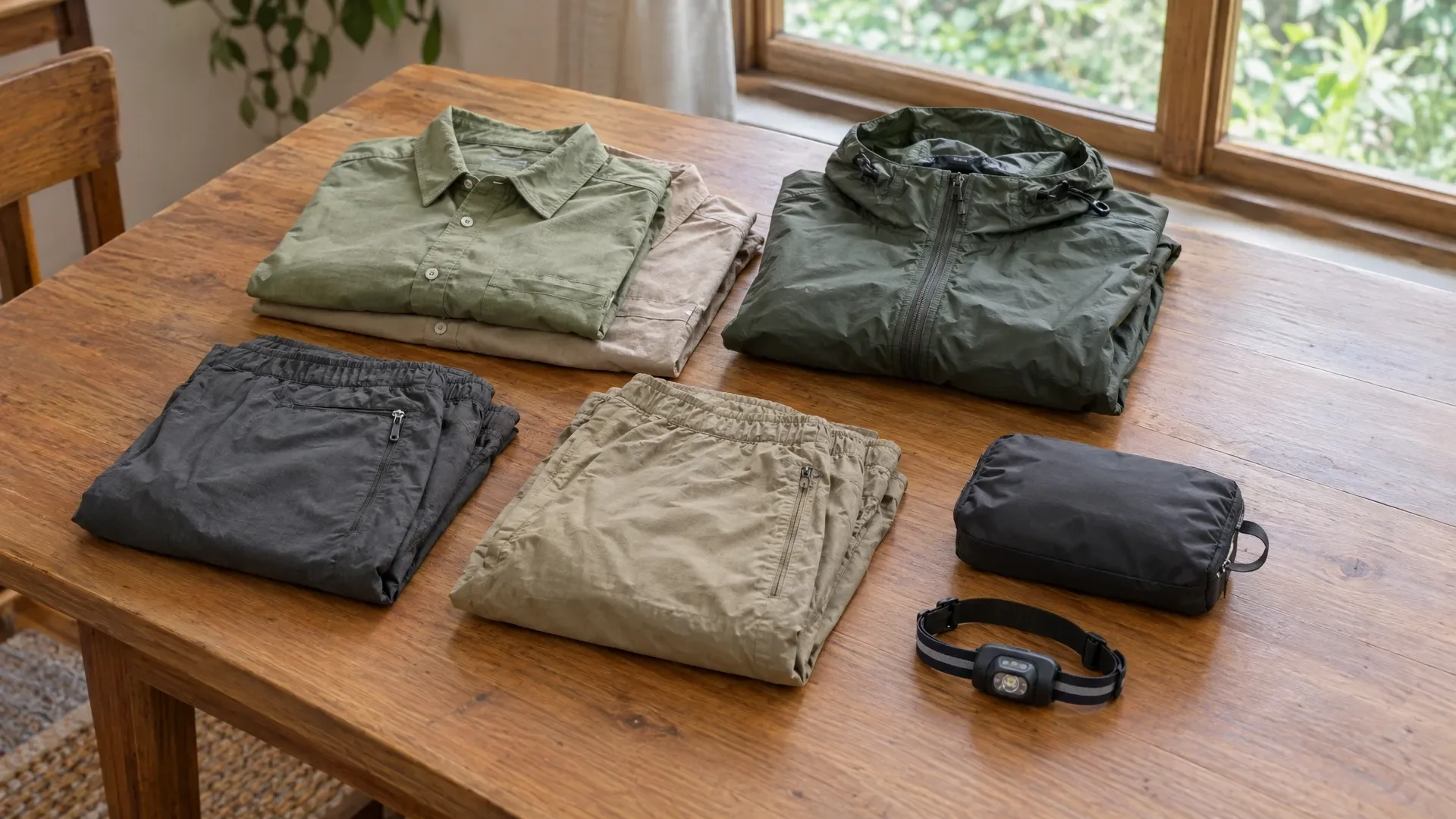
The basics that travel with you
- Underwear, socks and shirts for the interval between laundry stops, plus a clean set for laundry day.
- Lightweight long trousers and a second pair or skirt suited to your outings; perhaps shorts for warm days.
- A thin long-sleeved shirt, a fleece or jumper, and a jacket that keeps out wind and rain.
- Comfortable shoes you have already walked in; light sandals or flip-flops for your accommodation if you use them.
- Sleepwear, a compact toiletry bag and swimwear if a pool or beach is part of your trip.
- A small daypack, refillable bottle, cap or hat, sunglasses, sunscreen, insect repellent and a separate laundry bag.
This is a starting point, not a fixed number of items for everyone. If you plan to wash after five days, count those five days and a spare set, not all three weeks of your trip. Consider what you wear together too: the thin shirt underneath your fleece is no longer a clean spare that day.
By the sea: wind and an ordinary city day
For Lima and Paracas, a light wind-resistant layer is useful alongside your everyday clothes. Winter in Lima can be grey and damp; bring something comfortable for a long lunch or museum visit too. A light shirt, jumper and outer layer can each be worn separately. If your trip centres on beaches and summer days, give lightweight clothing more room. You do not need a separate outfit for every coastal town.
In the Andes: think about the evening too
For Cusco, Puno and an overnight stay in the Colca Valley, warm clothing belongs in your bag even when the afternoon is sunny. A thin base layer, fleece or jumper and an additional warm jacket let you adjust to mornings, walks and evenings. If you feel the cold easily, consider thermal bottoms, a warm hat and gloves too. Check heating and bedding when choosing accommodation; the afternoon temperature alone says little about what will feel comfortable in your room.
City visits and a short walk call for different footwear from several days on mountain trails. Choose shoes for the walk you actually book and wear them in at home. A trek needs its own equipment list: sleeping bag, mat, tent, carried luggage and any rental items should be clearly itemised. Ask what is included, what you carry yourself and whether your size is available. A general trip packing list does not replace those arrangements.
For the forest: light clothing and a dry set
For walks around Tambopata or Iquitos, lightweight long sleeves and long trousers are a useful base. Add rainwear and keep a dry evening set separate from your walking clothes. A water-resistant inner bag is useful for clothing and electronics; separate wet items and air them when you arrive. For an excursion after dark, bring your own torch or headlamp with suitable batteries or a charging cable.
Ask your lodge about boots, rainwear and charging before you leave. Are rubber boots provided, and is your size available? When can you charge equipment? Which bag can travel on the transfer? Provided equipment may save luggage space, but do not assume one lodge offers the same things as another. The answers determine what you add yourself.
Train luggage and your Machu Picchu daypack
Separate your overnight luggage for Machu Picchu Pueblo from your daypack for the archaeological site. A foldable daypack can travel inside your train bag; keep the combined luggage within your allowance. Inca Rail lists one item of hand luggage weighing up to 8 kg and measuring no more than 118 cm in combined height, length and width. PeruRail publishes rules by route and service; read your booking conditions alongside its current baggage page. A suitcase accepted in an aircraft cabin does not automatically fit your train booking.
For the archaeological site, the official code of conduct specifies a maximum bag size of 40 × 35 × 20 cm. Measure the packed bag, rather than relying on the litre capacity on its label. Take only what you need for the visit and leave overnight items somewhere agreed in advance. Train baggage and bags at the entrance are subject to two different checks.
Arrange where your larger luggage stays and where you will collect it. Leaving it in Ollantaytambo works if you return there; a different return route needs a different plan. Ask the hotel or carrier about the storage location, opening hours and any charges. Keep documents and items needed for the shorter leg with you.
Laundry frees up space when you plan it in
Arrange laundry during a stay of more than one night. When handing it over, ask when it will be returned, how the price is calculated and whether delicate items go in a dryer. Set aside clean clothes for that day. Rinsing out an item yourself is another option, but count a shirt as a spare only once it is dry. A laundry bag makes it easier to remember what is clean after several hotel changes.
Cables, torch and power bank
Keep chargers and cables together and bring what suits your devices. Charge a torch before an evening excursion. Power banks have separate flight rules: LATAM lists a maximum of two units of up to 100 Wh each, in hand luggage only and accessible under the seat, not in the overhead locker. Using or charging a power bank on board is not allowed there. Check each airline's current conditions before packing one.
Try packing the smaller train or lodge bag at home too. Does your jacket fit once you take it off? Can you reach tickets and a dry shirt without unpacking everything? That short trial shows you what works better than another list.