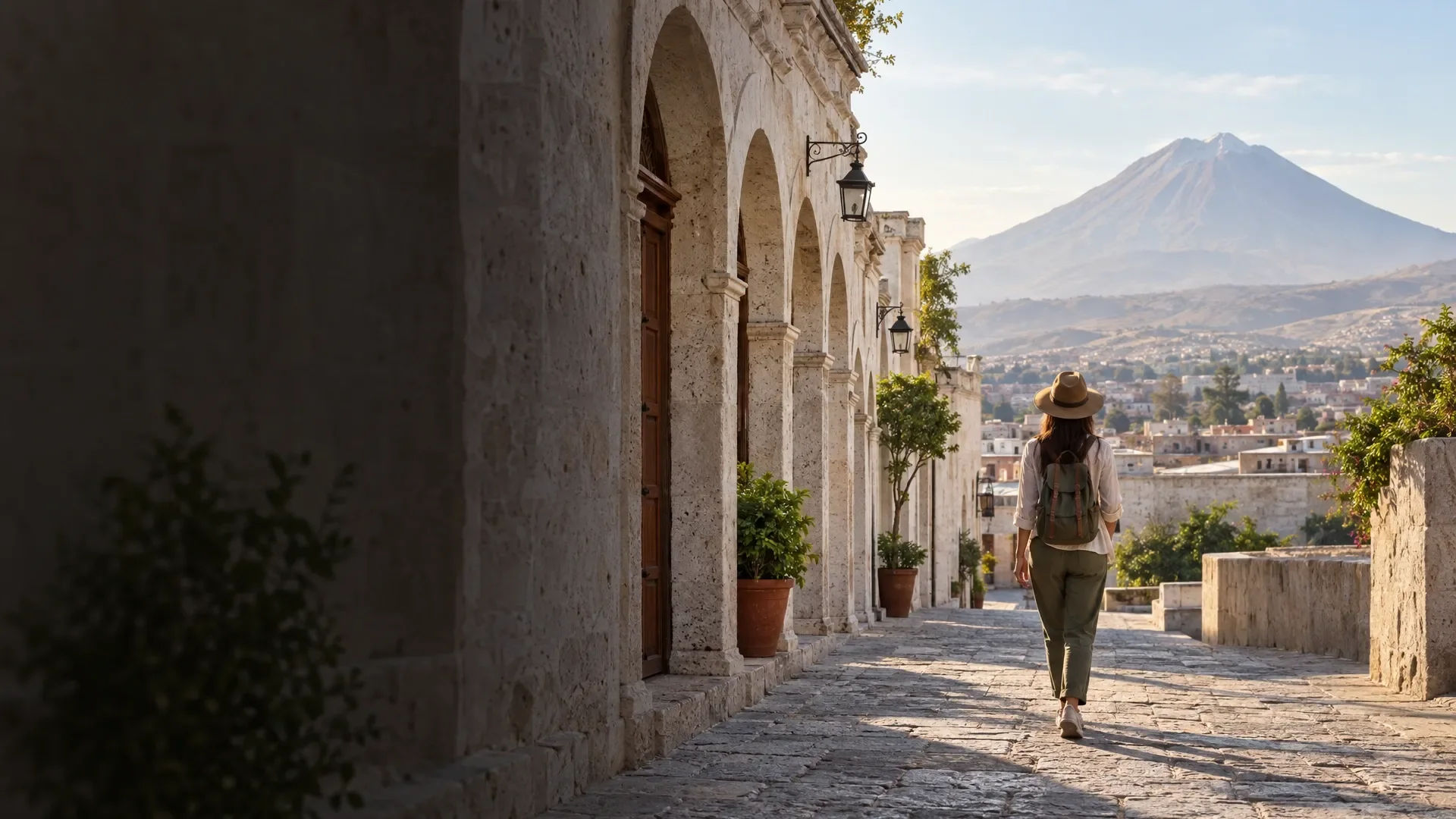
Arequipa lies in southern Peru, with the volcanoes Misti, Chachani and Pichu Pichu in the surrounding landscape. Many buildings in the historic centre are made from pale volcanic stone called sillar. That is where the city gets its nickname, ‘the White City’. Long façades and rows of arches line the Plaza de Armas, with the cathedral stretching along one whole side of the square.
Behind the façades are courtyards and cloisters. Santa Catalina contains a whole network of lanes and living quarters within its walls, with red and blue walls set against the pale stone. Further on, San Lázaro feels smaller in scale: narrow passages, paved lanes and sillar houses. The main square, the monasteries and those residential streets reveal very different sides of Arequipa.
Arequipa has a distinctive character at the table too. Traditional picanterías serve stuffed rocoto peppers and hearty shrimp soup; for something sweet, there is queso helado, an ice dessert made with milk, cinnamon and coconut. Food is as much part of a city visit here as monuments and museums. Many travellers pass through on their way to the Colca Valley, but Arequipa offers enough for a stay centred on the city itself.
A white city built from volcanic stone
That pale stone is called sillar. It is volcanic and can also be pink, so the nickname ‘White City’ doesn't tell the whole story. The historic centre brings together European architectural forms and Indigenous building techniques and decoration. Its thick walls, vaults and courtyards also belong to a city repeatedly rebuilt after earthquakes. The centre has been a World Heritage Site since 2000.
You can see it clearly at La Compañía, where the stone has been worked into a richly carved façade. The same stonework returns in courtyards, around arches and passageways. It is not only the churches but also the old houses that make the centre interesting. Some courtyards are open to visitors.
Places worth exploring
Plaza de Armas and the stonework of La Compañía
The Plaza de Armas forms the centre of the historic street plan. On one corner stand the church and cloisters of La Compañía. Its richly carved façade and cloisters show why Arequipa offers more than a collection of white buildings. If you'd like to go inside, check which spaces are open when you visit.
Santa Catalina: streets behind a monastery wall
Santa Catalina isn't a church you simply pop into. Inside its walls is an extensive complex with streets, cloisters and living quarters of its own. The reds and blues catch your eye, but look at the rooms too: how did people live here, and how much space did they have? Those questions make the visit more interesting than simply moving from one colourful wall to the next.
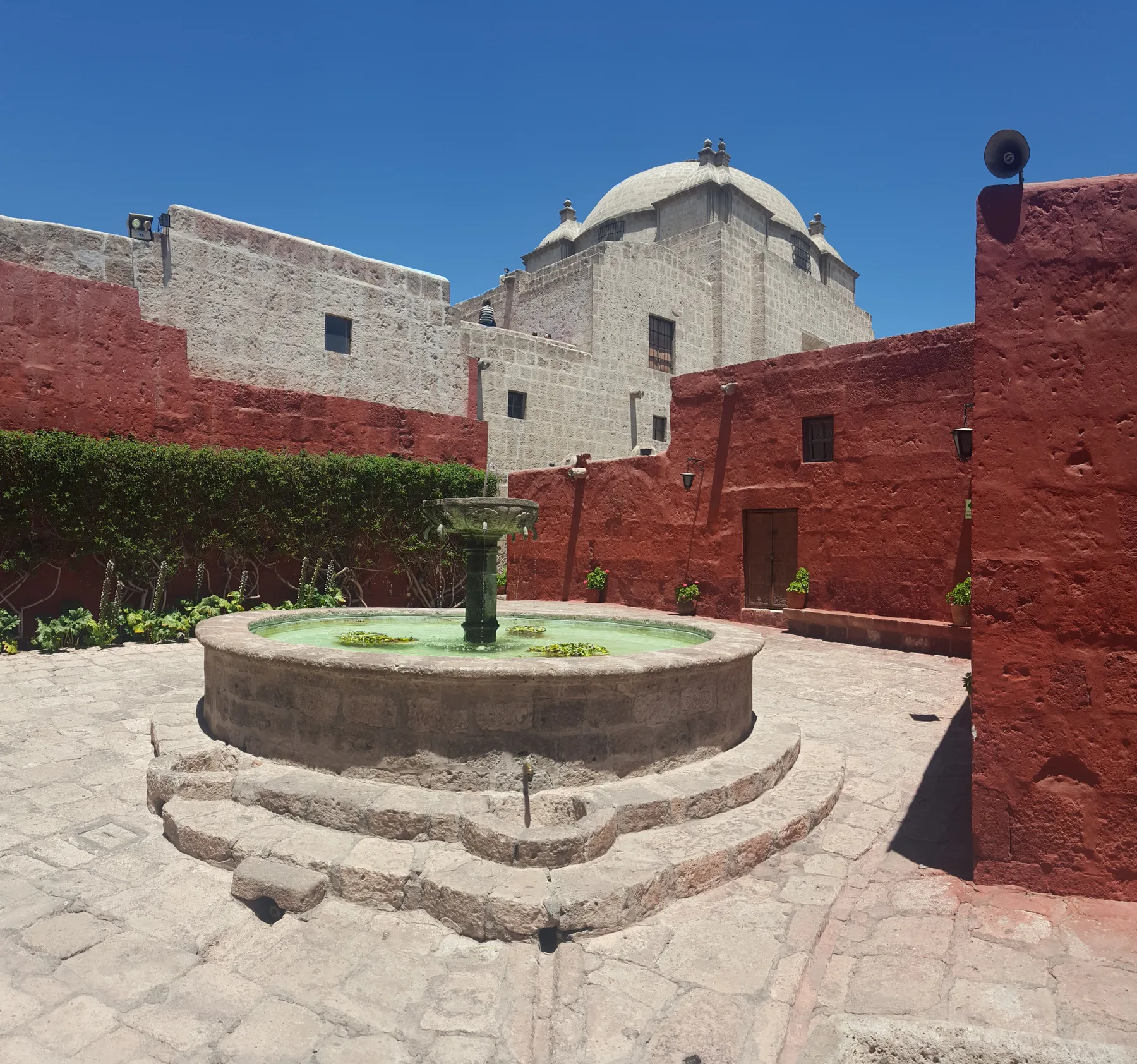

Leave a generous part of a morning or afternoon for this. That gives you time to linger, return to a courtyard or take a closer look at a room. If you'd like a guide's explanation, ask about the language, duration and cost.
A detour through San Lázaro
The streets of San Lázaro lie around Campo Redondo, with paving, sillar houses and narrow passageways. Lanes such as Violín and Bayoneta give the neighbourhood a distinct scale beside the spacious centre. There is no big programme to follow: San Lázaro is also an ordinary residential neighbourhood.
Yanahuara: the city from the other side
Yanahuara lies across the river from the centre. The viewpoint's white arches frame the city, with Misti, Chachani and Pichu Pichu behind it on a clear day. The neighbourhood leaves room for a walk or lunch, but a place ‘in Yanahuara’ is not necessarily beside the viewpoint.
San Camilo: from market stall to menu
Mercado San Camilo shows you a different side of the city from the main square: fruit, vegetables, cheese, herbs and stalls selling food, drinks and sweets. As a lead-in to lunch, the market connects ingredients with what might appear on the table later. If you'd like to photograph someone behind a stall, ask first.
Santuarios Andinos: Juanita's story
Museo Santuarios Andinos explores archaeological finds in the Andes and Inca sacrificial practices. The best-known name is Juanita, the girl found on Ampato. The context surrounding the objects and their discovery is the reason to visit. The subject also involves a child's death and human remains; if you're travelling with children, discuss beforehand whether this is something you want to see together. Ask the museum which original remains will be displayed on the day of your visit.
Make lunch part of the plan
A picantería is a traditional place to eat with a history of its own. Its roots lie in establishments where people drank chicha with something spicy alongside; over time, the food took centre stage. Lunch here belongs in a visit to Arequipa just as much as a museum does. Ask what's cooking that day and how large the portions are before ordering several courses for everyone.
- Rocoto relleno: a stuffed rocoto chilli, usually with meat and cheese. It may look like a bell pepper, but it is a chilli.
- Chupe de camarones: a substantial soup with river shrimp. Think lunch, not just a small starter.
- Solterito de queso: a combination that includes cheese, broad beans, corn and olives.
- Adobo: a pork dish made with ingredients including ají, onion and chicha de jora. It is particularly associated with Sunday mornings.
- Queso helado: a frozen dessert made with milk, cinnamon and coconut. Despite its name, it is a frozen dessert, not a cheese platter.
Choose a restaurant to suit the meal you want: for a picantería lunch, look at the day's menu and lunch opening times; for adobo, check breakfast service. If you have dietary requirements, ask about the preparation, including what's in the stock or sauce.
One lunch option is La Nueva Palomino, at Leoncio Prado 122 in Yanahuara. Check the menu through the restaurant's own channel and consider combining lunch with the viewpoint. You'll find the link in the sources below.
One way to spend two days in the city
Two full days leave room for the longer visits and the city in between. This is a suggestion you can rearrange, not a timetable. Your arrival day and your time in Colca are not included.
Start with the centre and Santa Catalina
Start in the Plaza de Armas and walk past La Compañía. Then choose whether to visit Santa Catalina before or after lunch. Leave the rest of that morning or afternoon for the streets in between and a detour through San Lázaro. That's a full city day without having to keep arranging transport to the next excursion.
The market, a museum and lunch across the river
Begin at San Camilo and visit Santuarios Andinos if its history interests you. Then cross towards Yanahuara, perhaps making a picantería lunch the main plan and adding the viewpoint. If you'd rather spend longer in the museum or at the table, there's no need to tick off everything else. With just one city day, choose the square, La Compañía, Santa Catalina and a good lunch.
Where makes a useful base?
For a first visit, start looking in the historic centre or towards San Lázaro. That puts many of these walks within reach of your accommodation. Yanahuara is another option if you particularly want to spend time there; factor in crossing to the centre. Look at the actual street and where the room faces, not just the neighbourhood name. A street-facing room and one overlooking a courtyard can make for very different stays in the same hotel.
If you're arriving after an overnight bus, ask beforehand when you can check in and whether you can leave your bags earlier. That helps you decide whether to head out straight away or find breakfast first. If you're continuing to Colca and returning to the same hotel, also ask whether you can leave some luggage behind. For the city visits above, your hotel's location matters more than the number of excursions its reception desk sells.
Exploring beyond Arequipa
The Ruta del Sillar: where the city gets its stone
If all those façades leave you curious about how sillar is quarried and worked, consider a trip to Añashuayco. The stonemasons' work is the focus here. Tours sometimes combine it with Culebrillas, a separate walk through a narrow gorge. Ask which places, entry fees and walking sections are included. The name ‘Ruta del Sillar’ isn't a complete description of the excursion.
Give Colca its own days
The Colca Valley is a continuation of your trip, not a neighbourhood of Arequipa. Decide between visiting villages and viewpoints or making walking the focus of your stay. Chivay and Cabanaconde play different roles in those plans. Start with our regional guide and then choose a route to match; two days outside the city don't replace the two city days described here.
What if museums aren't really your thing?
Go for the façades around the square, San Lázaro, the market and a picantería lunch. Santa Catalina may still appeal if you prefer walking through rooms and lanes to looking at display cases. The museum about Juanita doesn't have to be part of your visit.
Do I need tickets for everything in advance?
A walk around the square and through the neighbourhoods doesn't need an excursion booking. Check current admission arrangements separately for the monastery, museum or a guided visit, particularly around holidays. Compare what's included too: admission and guiding aren't always the same thing.
Staying on Plaza de Armas
A room on the main square puts you in historic Arequipa. The setting is part of the appeal, but which room you book matters too.
Katari Hotel at Plaza de Armas
Katari stands on Plaza de Armas, opposite the cathedral, with a rooftop terrace overlooking the square and volcanoes. Ask where your room is before booking: a recent guest reported noise by the courtyard. A central address is handy for exploring, but it does not guarantee a quiet bedroom.
Places to stay on the map
Where is it?
Arequipa and the surrounding area.