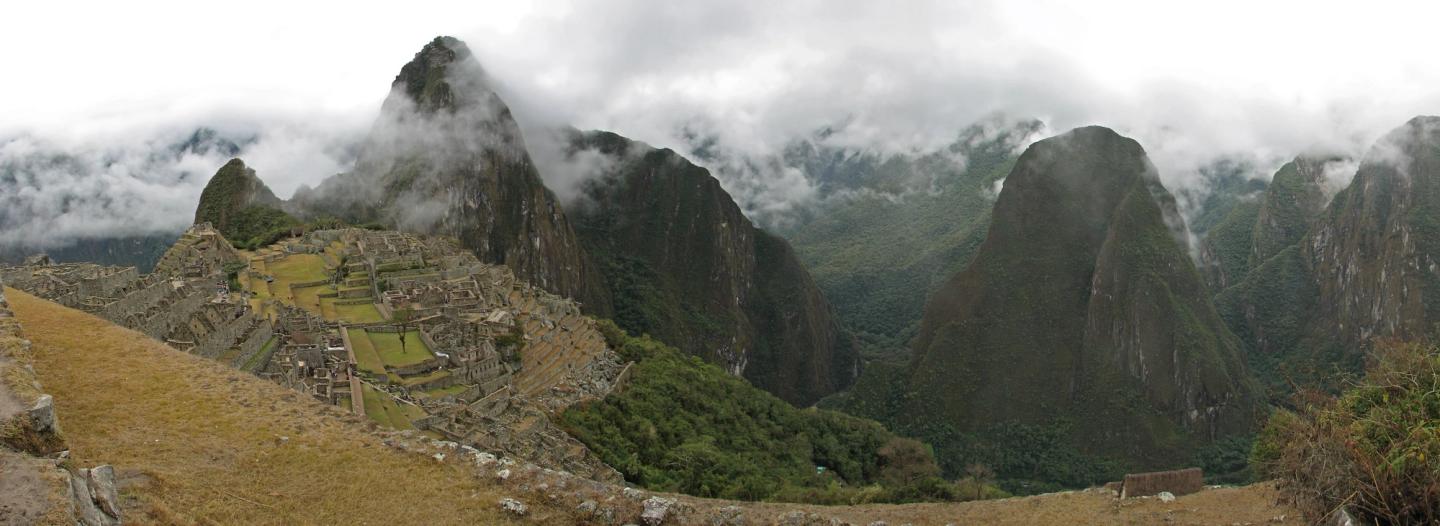

Machu Picchu occupies a narrow ridge above the Urubamba valley. Terraces step down the slope, stone buildings follow the available ground and steep green mountains rise around them. The familiar photograph shows everything at once. On site, the contrasts stand out: a large open space beside small rooms, carefully worked stone beside the rough mountain.
The setting is not a backdrop you can remove. Without the slopes, water and surrounding forest, this would be a different place. Machu Picchu belongs to a mixed cultural and natural World Heritage property. The construction and the landscape are part of the same visit.
A royal estate with residents and work
Archaeologists interpret Machu Picchu as an Inca royal estate. It was not solely a ceremonial place: people lived and worked here to support the elite's residence. That gives the smaller spaces between impressive walls a role too. A palace depends on people who cook, make things and maintain it.
Research continues to change the picture. A 2021 study dated occupation roughly between 1420 and 1530, beginning earlier than the chronology long inferred from written accounts. Later genetic research found varied origins among the residents studied. The population did not simply come from one neighbouring place. Behind the walls was a community with different backgrounds.
Terraces give the mountain structure
The terraces show how the builders worked with steep ground. They created level agricultural space and helped manage the slope. Their form gives the panorama its rhythm, but they are more than an attractive border below the buildings. Look at how the built areas relate to the farming space: the arrangement of an entire settlement becomes clearer.
A first view need not be only a photograph. From your permitted route, identify the ridge, terraces and open spaces. When you later come closer to buildings, you will have a better sense of where you are. It helps avoid treating every wall as an isolated attraction.
Stonework worth a closer look
Finely worked stone is a major part of the appeal. At the Torreón, the structure known as the Temple of the Sun, a curved wall stands out. The building is interpreted as religious. Such a difference in shape gives you something specific to consider: why did this space receive different treatment from ordinary accommodation?
Not every visit passes every structure. Use names such as the Temple of the Sun to identify your interests, not as a checklist every ticket should deliver. Seeing a building from a nearby part of the circuit may also differ from entering it. A guide familiar with your route can explain beforehand what you will actually see.
The quieter achievement: water
Water supply and drainage made life here possible. A spring fed a channel and a series of stone fountains; drainage carried away excess rainfall. It offers a useful counterpoint to the panoramas. A channel or waterwork, rather than the tallest structure, can reveal the thought behind the site's construction.
Ask a guide about something specific: where the water came from, how the slope was arranged, or what stonework reveals about a building's purpose. It gives the explanation more direction than an uninterrupted sequence of names and dates. With children, one question to return to during the visit can work better than trying to remember every historical detail.
The forest belongs to the story
The protected Machu Picchu area includes humid mountain forest. SERNANP records orchids, many bird species and mammals such as the spectacled bear. This describes the wider area, not animals you can expect at the entrance. Notice the vegetation and the mountainsides beyond the buildings too. The view does not stop at the last wall.
What do you most want to see?
Start with your preference: the overview from terraces, buildings at closer range, or an additional mountain walk. These are different aims. Then compare the official route map with the ticket you are considering. Add a mountain because you want that walk, not because it is an upgrade that makes everyone's visit better.
Official route information comes from the culture authority; the government's online ticket channel is Tu Boleto. Let the route, date and entry time on your booking guide the train and overnight arrangements. Our separate tickets-and-circuits guide explores that decision in more detail. This page helps you decide what you are coming for, so booking does not become the whole story. Machu Picchu tickets and circuits without choice paralysis
A day that works beyond the entrance
Many visitors stay in Aguas Calientes, also called Machu Picchu Pueblo, and continue from there to the entrance. The train takes you to that town, not directly to the archaeological site. A night beforehand separates travel from the visit; a night afterwards gives you time for a meal before continuing your journey later.
Dress for time outdoors, with shoes for uneven stone and protection from rain and sun. Clouds can change the view; early entry does not guarantee the photograph you imagined. It helps to be interested in something smaller as well as the panorama, such as stonework or water engineering. The day then has more to offer than one hoped-for image.
With limited mobility, the exact route needs its own preparation. ‘Lower’ does not mean level. Ask about steps, surfaces and assistance for the visit you are booking, including the connection from town. The separate mobility guide helps make those questions specific; we do not label a circuit universally accessible here. Machu Picchu with limited mobility: what to arrange ahead
Looking further after Machu Picchu
The Museo de Sitio Manuel Chávez Ballón, down by Puente Ruinas, displays archaeological finds from the area. It is a useful addition if you want to understand how the place was used. Above, you see buildings and their setting; in the museum, objects bring you closer to the people behind the landscape. Give it a separate visiting slot rather than squeezing it between the descent and a departing train.