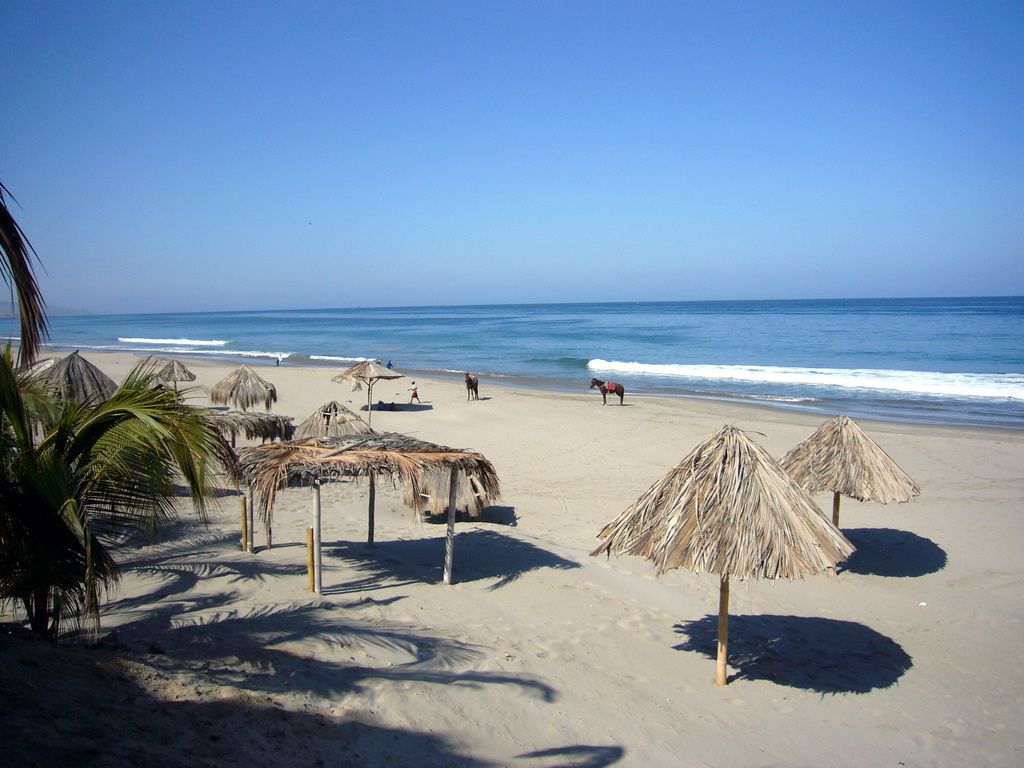

On the coasts of Piura and Tumbes, desert, dry forest and tropical sea press close together. Along the Pan-American Highway are surf towns, fishing villages, dispersed hotel strips and broad bays; farther north, water branches through estuaries and mangroves near Ecuador. Máncora is the best-known name, but not a summary of the coast. Los Órganos, Vichayito, Cabo Blanco, Punta Sal and Zorritos offer different relationships between town, beach, food and transport.
First choose what you want beside your accommodation each day. Máncora provides the most activity and services within walking distance. Los Órganos combines a functioning coastal town and fishing pier with access to nearby beaches. Vichayito and Las Pocitas consist more of dispersed coastal accommodation, so a restaurant or shop is not automatically close. Punta Sal is a long bay with resort and village sectors; Zorritos is a regional beach town that connects more naturally with Tumbes and mangrove trips.
Piura’s coast has several characters
Lobitos and Cabo Blanco: the sea as the main reason
Lobitos and Cabo Blanco lie south of the familiar beach cluster. Lobitos chiefly attracts surfers and is a small fishing settlement on a distinctive surf coast. Cabo Blanco is a fishing village with a large place in surf and sport-fishing history. Both suit travellers coming for a particular wave, coastal history or village atmosphere; they make less sense as quick additions between a hotel and airport.
A famous surf name is not a forecast for your day. Wind, swell, tide and experience determine which break is usable. Ask a local school or rental shop about the current entry, seabed and distance to assistance, and choose equipment for the conditions. Non-surfers can still appreciate the fishing coast and landscape, but should check that food and return transport fit.
Los Órganos as a town, Vichayito as a coastal strip
Los Órganos has a square, shops and an artisanal fishing pier close to its broad shore. Punta Veleros lies on the town’s southwestern side. It is a practical base when you want local transport, food and a departure point for a sea trip in one settlement. This does not mean every room is waterfront; check the exact street and route to the beach.
Vichayito lies a few kilometres north within the same district. Accommodation is more dispersed along an open sandy beach and often more self-contained. That suits slow hotel days, but makes breakfast, lunch and dinner part of the accommodation decision. Ask whether you can walk directly from the property to the public beach and how to reach Los Órganos or Máncora without a car.
Máncora: convenience, surf and more movement
Máncora brings restaurants, bars, shops, surf schools and through transport together. This makes it practical without a car or when arranging several activities. The same concentration creates more traffic and evening noise in the centre. Our separate place guide compares the lively town, Las Pocitas and nearby coastal stays without treating their names as a single neighbourhood.
Las Pocitas takes its name from pools revealed between rocks at low water. The landscape therefore changes with the tide and the rocks remain part of the shore. Do not treat the pools as a permanent natural swimming facility. Before entering the water, look at current sea conditions, marked areas and local instructions; a beautiful bay or quiet hotel says nothing about currents at that moment.
Tumbes: bays and estuaries rather than one beach
Punta Sal and Canoas: an extended stay coast
Punta Sal stretches along a broad bay in the district of Canoas de Punta Sal. Hotel names sometimes use ‘Punta Sal’ for addresses far apart. Check the exact kilometre location, nearest village and what can be reached on foot. A stay that handles meals and transport well may matter more here than the general beach name.
Zorritos: a coastal town with Tumbes within reach
Zorritos is the capital of the coastal province of Contralmirante Villar and lies closer to Tumbes city than the Piura beaches. Its elongated settlement, seafront and local restaurants make it more town than enclosed resort strip. It is a logical base for combining beach time with one focused mangrove day, provided that trip is organised around the correct entrance.
Tumbes city is principally a transport and organising base. It is not on the same beach as Zorritos or Punta Sal, nor beside the official entrances of the national mangrove sanctuary. Use a night in town for a flight, bus, border connection or early nature trip; choose a coastal town when waking beside the sea matters more.
Mangroves: two names, different visits
Los Manglares de Tumbes National Sanctuary is in Zarumilla province. Fresh river water and salt tides create estuaries, islands and root forests. SERNANP describes a traditional route from Puerto 25 or El Algarrobo control post and a specialised route farther towards Isla Matapalo and Punta Capones. Tide and management determine how a boat visit actually runs.
Puerto Pizarro also has mangrove channels, boats and restaurants, but is not simply another name for the national sanctuary. Ask a provider for the exact boarding point and route, and whether it enters the SERNANP area. Ask the sanctuary directly which route and provider are permitted on your date before booking.
A boat trip is first a way to understand the tidal landscape, mangroves and local use of waterways. Birds, fish, crabs and other animals live here, but a particular species does not appear on request. Ask how the route handles distance from wildlife, noise, tide and control-post rules. That lets you compare providers on substance without asking for a sighting guarantee.
Protected sea and dry forest
Since 2024, Mar Tropical de Grau National Reserve has protected four marine sectors: Banco de Máncora, Arrecifes de Punta Sal, Cabo Blanco–El Ñuro and Isla Foca. Its boundaries follow ecology and fishing activity, not the string of hotels along the road. A bay beside or within a protected sector is not automatic permission for every boat activity. Ask about the current route, permit and observation protocol.
Inland, Cerros de Amotape National Park protects dry hill forest and, in its wetter northeast, Pacific tropical forest. This is a substantial nature choice alongside the beaches, not a short shaded detour. SERNANP lists Rica Playa and Angostura as access points. Ask the park manager which entrance is open for your route and what guidance and facilities you need to arrange in advance.
Choose one base and one layer of depth
- Máncora for restaurants, surf arrangements, transport and nightlife close together.
- Los Órganos for a functioning coastal town, fishing pier and surrounding beaches.
- Vichayito or Las Pocitas for stay-focused days where hotel location and meals matter.
- Punta Sal for a bay or resort stay; verify which part of the long coast the property means.
- Zorritos for beach time paired with Tumbes and a separately arranged mangrove day.
- Lobitos or Cabo Blanco when surf, fishing history or the village itself is the main reason.
Then choose sea, mangrove or dry forest for nature depth. A sea trip from Los Órganos, a mangrove circuit via Zarumilla and a visit to Cerros de Amotape use different departure points and managers. Combining them into one long excursion mostly reduces time on the water or in the forest.
Food between fishing pier, plantain and mangrove
On the Piura coast, cebiche and sudado are natural fish choices, but look inland too. Seco de chabelo combines roasted, mashed plantain with dried or fried meat; majado de yuca mixes mashed cassava with chicharrón. Chifles are thin fried plantain slices, while natilla is a sweet made with milk, chancaca and rice flour.
In Tumbes, plantain meets shellfish and fish. Majarisco is mashed green plantain with a seafood preparation; cebiche or rice with conchas negras uses black mangrove shells. These species are subject to harvest rules and closed seasons. Ask what is legally available and being cooked that day, rather than demanding a protected product as a permanent speciality.
Arriving is not the same as reaching the beach
Flights to Piura, Talara or Tumbes and long-distance buses on the Pan-American Highway provide different gateways. Verify which airport and arrival time genuinely serve your chosen coastal base. A bus stop in Máncora or Los Órganos may be more convenient than travelling via a city airport, but Vichayito, Las Pocitas and many resorts still require local transport.
The towns form a line along a long road, but transport does not work like an urban metro. With a taxi or transfer, agree the address, baggage, price and return; on a colectivo, ask where you will get out. Arrange a boat day only after the pier or control post is clear. There is no need to change hotels solely to see a nearby bay.
Let current sea conditions determine the activity
A beach can change within a day with tide, wind and swell. For swimming, surfing or boating, ask about currently marked areas, port status and local instructions. For a boat trip, provider authorisation, flotation equipment, maximum group size and return plan are more useful questions than a general promise of calm water.
The north coast as its own travel block
From Chiclayo, the overland route continues north through Piura and Talara; Tumbes connects with the Ecuador border. Make the beaches their own block between those long journeys. Arriving by night bus, taking a boat the same morning and continuing onward leaves little margin for terminal changes or port instructions. One well-chosen coastal base provides more freedom than several hotel changes along the same road.